
RE2020 thermal study in Aix-en-Provence - ARKEMEP
Objective: to ensure your RE2020 compliance in Provence and to anticipate technical choices from the outset of the project.
ARKEMEP conducts RE2020 thermal studies in Provence, tailored to local climatic constraints and regulatory requirements for new construction.
Our engineers define the optimal technical choices to guarantee your project's compliance, stabilize design decisions, and reduce risks during the tendering and execution phases.
Our engineers define the optimal technical choices to guarantee your project's compliance, stabilize design decisions, and reduce risks during the tendering and execution phases.
Why a RE2020 thermal study specific to Provence?
The Mediterranean climate imposes specific conditions that directly influence thermal design. These constraints must be integrated from the design stage, in particular:
A localized RE2020 thermal study allows the project to be precisely adapted to the actual conditions of the Provençal climate.
- marked temperature variations,
- essential summer comfort,
- low heating requirements but sensitive to solar gains.
A localized RE2020 thermal study allows the project to be precisely adapted to the actual conditions of the Provençal climate.
Thermal studies in Provence: specific needs
The projects located in Aix-en-Provence and the Bouches-du-Rhône region have specific climatic characteristics:
➡️ Direct benefit: risk reduction in PC, DCE and construction phase.
- significant temperature fluctuations,
- increased summer comfort requirements,
- High sun exposure
- adapted ventilation requirements.

RE2020 thermal study: compliance and controlled technical choices
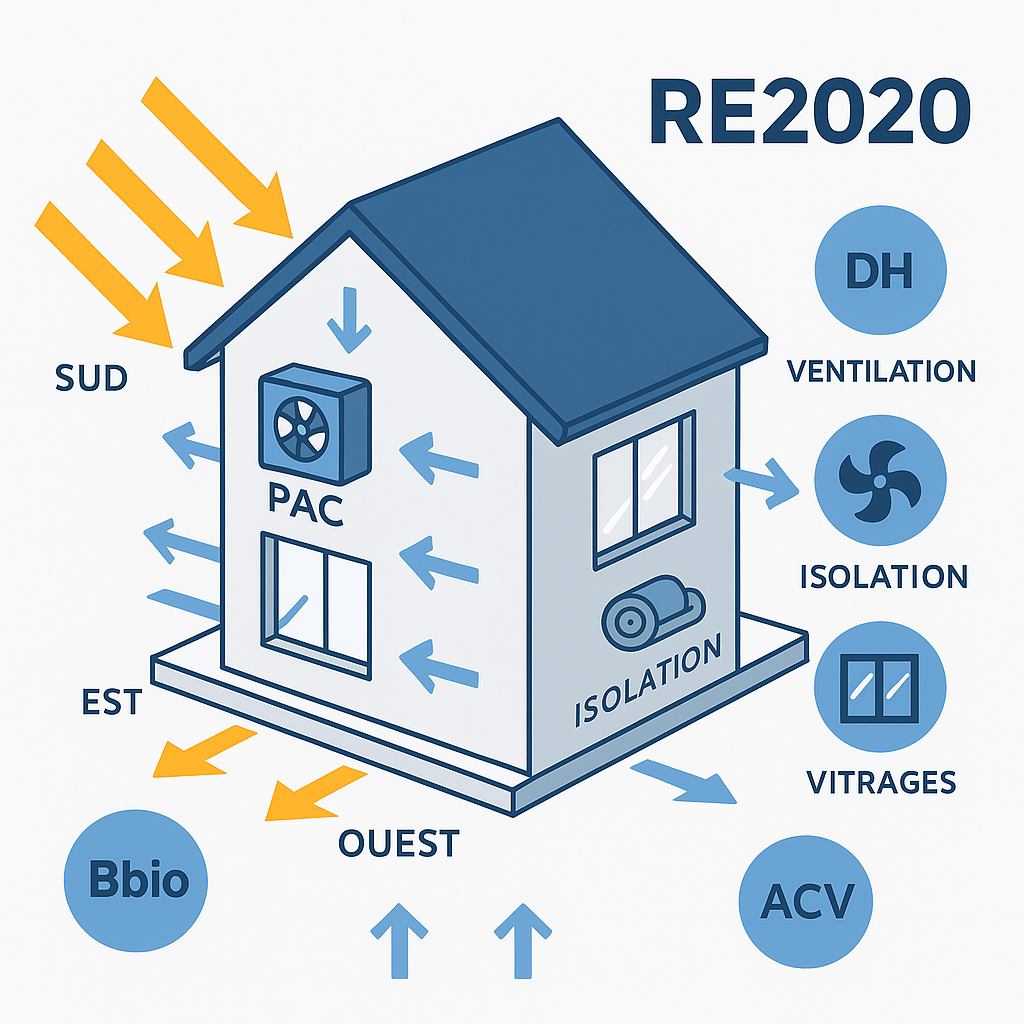
The RE2020 study is the key step in validating the building envelope, technical systems, and summer comfort. Our services cover:
- regulatory calculations (Bbio, DH, summer comfort requirements),
- simple variants of building envelope / systems (heat pump, ventilation, solar protection),
- optimization of solar inputs and sizing,
- Complete file for review and submission.
➡️ Our calculations are based on the Th-BCE 2020 method and incorporate Mediterranean bioclimatic specificities to stabilize design decisions.
Thermal studies and simulations on existing buildings
ARKEMEP also carries out thermal studies on existing buildings, upstream of renovation, rehabilitation or change of use projects.
These studies rely in particular on dynamic thermal simulations (DTS) and dynamic energy simulations (DES) which allow us to analyze actual consumption, summer comfort, overheating risks and potential for energy improvement in the existing building.
Dynamic thermal simulations (DTS)
The STD allows us to anticipate the actual behavior of the building, hour by hour:
- indoor temperatures during warm periods,
- influence orientation / sun protection,
- interaction ventilation / inertia / occupancy
- clear recommendations for controlling overheating.
➡️ Purpose: to ensure summer comfort and to document technical variations.


Dynamic energy simulations (DES)
SED assesses annual consumption based on actual usage:
- heating, domestic hot water, ventilation, lighting, auxiliary equipment
- Occupancy scenarios and work schedules,
- analysis of energy needs and reduction levers,
- regulatory trajectories in connection with the tertiary sector decree.
➡️ Usefulness: to anticipate consumption and control the carbon impact of systems.
Request a RE2020 thermal study
ACV RE2020: Building envelope, systems and carbon
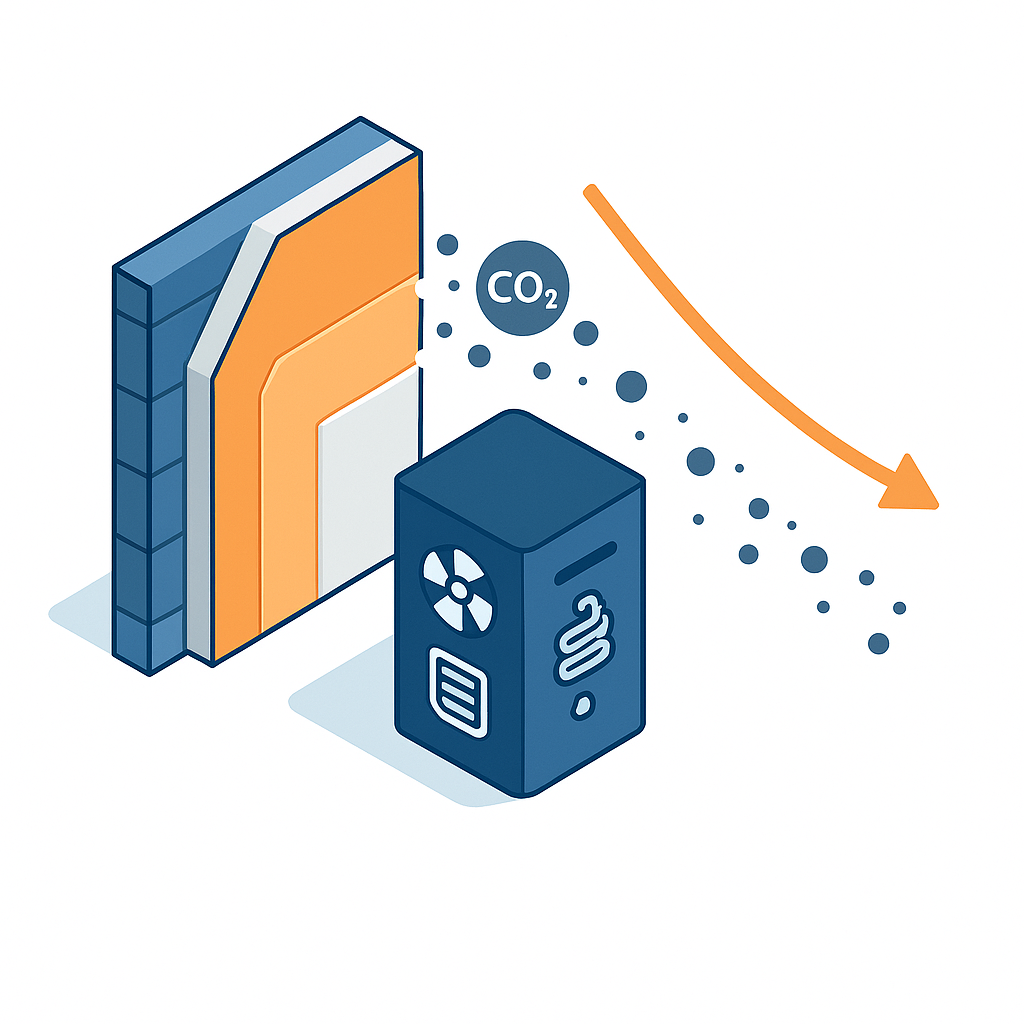
ARKEMEP is conducting the RE2020 life cycle analysis:
➡️ Result: a coherent sizing that complies with regulatory carbon thresholds.
- integration of FDES,
- carbon impact of HVAC/DHW systems
- envelope/energy variants,
- Carbon assessment of the building and regulatory justification.
➡️ Result: a coherent sizing that complies with regulatory carbon thresholds.

Indoor air quality (IAQ) and comfort
Our simulations allow us to objectively:
- Air renewal and CO₂ levels,
- ventilation efficiency,
- nocturnal hyperventilation strategies,
- Summer thermal comfort.
➡️ Advantage: reduced risk of non-compliance and improved occupant comfort.
Tertiary sector decree, OPERAT and energy trajectories
ARKEMEP assists project owners in preparing and analyzing their operational obligations:
- study of existing energy consumption,
- Determination of trajectories -40% / -50% / -60%
- simple scenario modeling,
- preparation of the data required for OPERAT declarations,
- analysis of consumer excesses (reading and interpretation).
➡️ Objective: to ensure compliance and optimize energy reduction actions.

Decision-making support for wealth management and energy trajectories
Thermal studies are a tool to aid in asset management decisions for project owners, landlords, property companies and local authorities.
They allow us to compare different work scenarios, define realistic energy trajectories and support regulatory obligations related to the tertiary decree.

Regulatory energy audits
We carry out the energy audits required for sales, renovations or technical decisions:
- thermal and energy diagnosis
- work scenarios by clusters,
- estimate of consumption reductions,
- analysis of the associated carbon impact.
➡️ Benefit: a clear, quantified and actionable vision for work planning.
Anticipating future RE2020 carbon thresholds
ARKEMEP incorporates the following into its studies:
- trends in the evolution of carbon thresholds,
- the levers for improving the building envelope/systems,
- variants designed to anticipate future requirements,
- a simple projection to secure the design over several years.
➡️ The result: a robust carbon strategy, ready for the 2025 and 2028 thresholds.
Types of supported projects
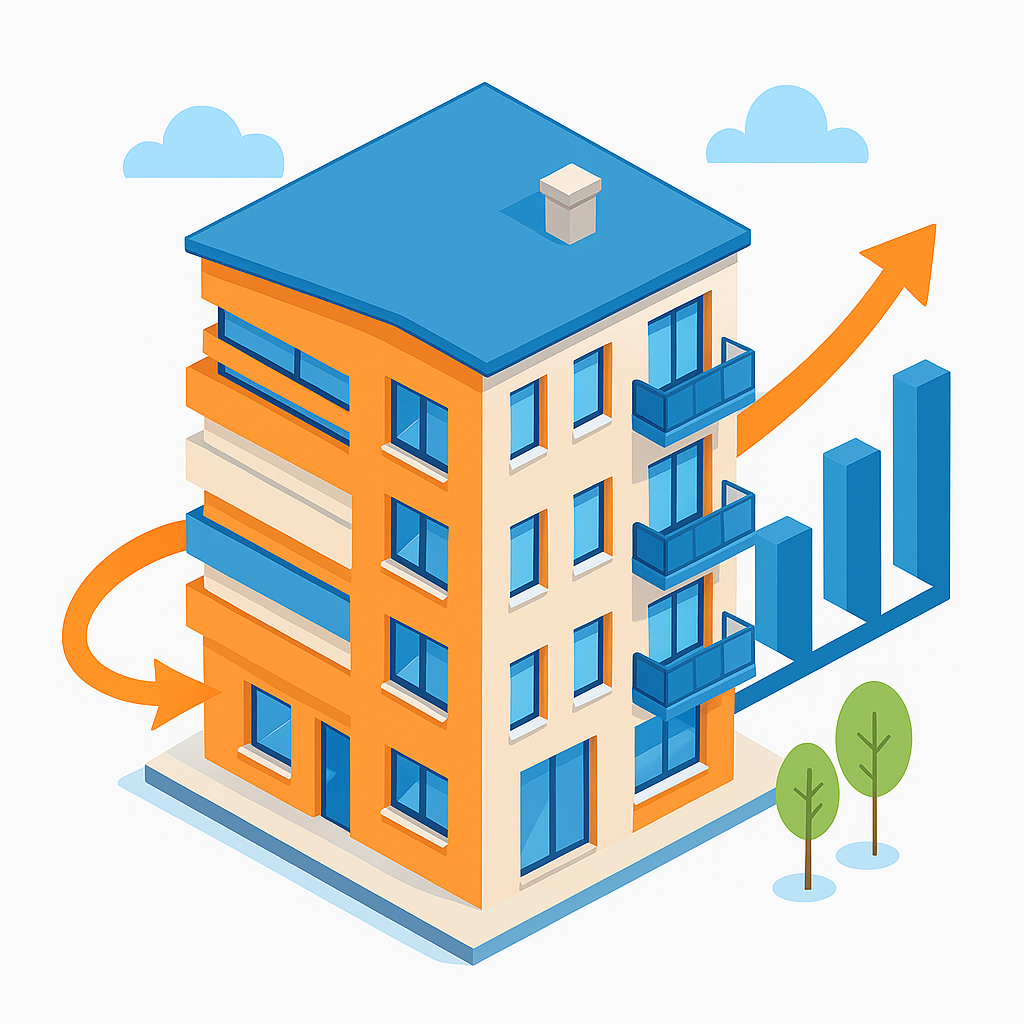
- Collective housing
- Student and intergenerational residences
- Tertiary sector (offices, shops, public access buildings)
- Health & Nursing Homes
- Public facilities
- Technically complex architect-designed houses
➡️ More than 1,000 projects completed since 2009.
Our added value
➡️ Objective: to secure the project and avoid technical inconsistencies downstream.
FAQ - Thermal studies & RE2020 in Aix-en-Provence
What documents are needed to launch an RE2020 study?
Floor plans, elevations, sections, energy description, glazed areas, systems under consideration.
What is the difference between STD and SED?
The STD analyzes comfort hour by hour. The SED models annual consumption.
Is the STD mandatory?
No, but it is essential for controlling summer comfort in a Mediterranean climate.
When to carry out a RE2020 LCA?
From the preliminary design/detailed design stage to anticipate carbon thresholds and adjust building envelope and systems.
How to prepare OPERAT for the tertiary sector decree?
We structure the data and energy trajectories (-40 / -50 / -60%).
Does the RE2020 regulation impose specific technical choices for HVAC systems?
No. It imposes performance levels. We compare several variants to identify the optimal solution.
What are the average timeframes for an RE2020 thermal study?
Quick assessment of standard projects upon receipt of plans. Longer lead times for complex operations.
How is summer comfort determined in Provence?
Analysis of solar input, thermal inertia, protection and ventilation according to Mediterranean climate.
What is the difference between STD and SED?
The STD analyzes comfort hour by hour. The SED models annual energy consumption.
What documents are required to start the RE2020 study?
Floor plans, elevations, sections, glazed surfaces, description of the systems envisaged.
RE2020 THERMAL STUDY IN AIX-EN-PROVENCE
Contact
ARKEMEP – Thermal & Performance Engineering Office
Aix-en-Provence • Marseille • Provence • PACA
Tel. 09 70 70 75 35
Aix-en-Provence • Marseille • Provence • PACA
Tel. 09 70 70 75 35