

Saturday, February 21, 2026
Strategic analysis of decree 2026-117 published in the Official Journal on February 21, 2026: simplification of public procurement, urban planning, water law and impacts on territorial projects.
Monday, February 2, 2026
Public debt is rising. So are interest rates. And yet, environmental expectations remain high. The latest EcoCharts – Public Finance report from BNP Paribas confirms a silent shift: budgetary constraints will become structural in most major economies by 2030. This observation goes beyond macroeconomics. It redefines, very concretely, how public and semi-public projects will need to be designed, prioritized, and justified.
Monday, January 26, 2026
A historic acceleration that shifts the risk to the upstream stages of projects. The announcement of the 2026 housing plan by Sébastien Lecornu marks an unprecedented change of scale for the real estate sector. With a target of 400,000 homes per year, the question is no longer whether to build, but how to produce quickly without jeopardizing the projects. In this context, the main risk does not disappear. It shifts. Where previously obstacles appeared during the construction or operational phases, they are now concentrated upstream, at the time of technical, regulatory, and environmental decisions. And it is precisely at this stage that the success, or failure, of the housing plan will be determined. This article is aimed at project owners, developers, social housing providers, and local authorities facing the acceleration of housing projects within the framework of the 2026 housing plan.

Thursday, November 27, 2025
Law No. 2025-1129 is revolutionizing urban planning procedures: fewer constraints, more deadlines met, but increased requirements on proof and conformity.
Thursday, November 20, 2025
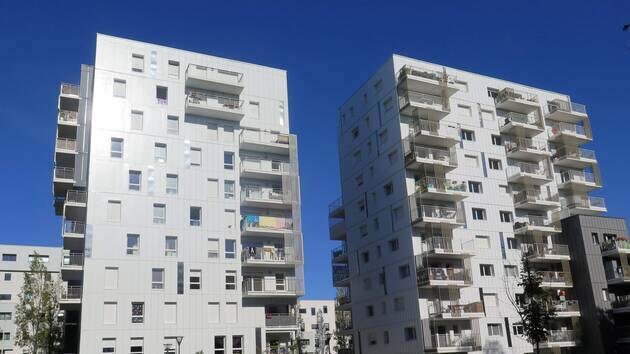
Why is the housing crisis primarily a crisis of coherence?

Friday, May 16, 2025
Launching a large-scale industrial or urban project no longer depends solely on political will or investment capacity. In the current context of energy and ecological transition, a project's success hinges first and foremost on its technical, environmental, and social feasibility. At ARKORIS, we intervene where intentions must become concrete actions. We support the implementation of complex projects throughout France, always careful not to confuse speed with improvisation. What we observe is that certain parameters are still too often addressed too late—or ignored altogether.